Announcement
Finance for Peace launched in London
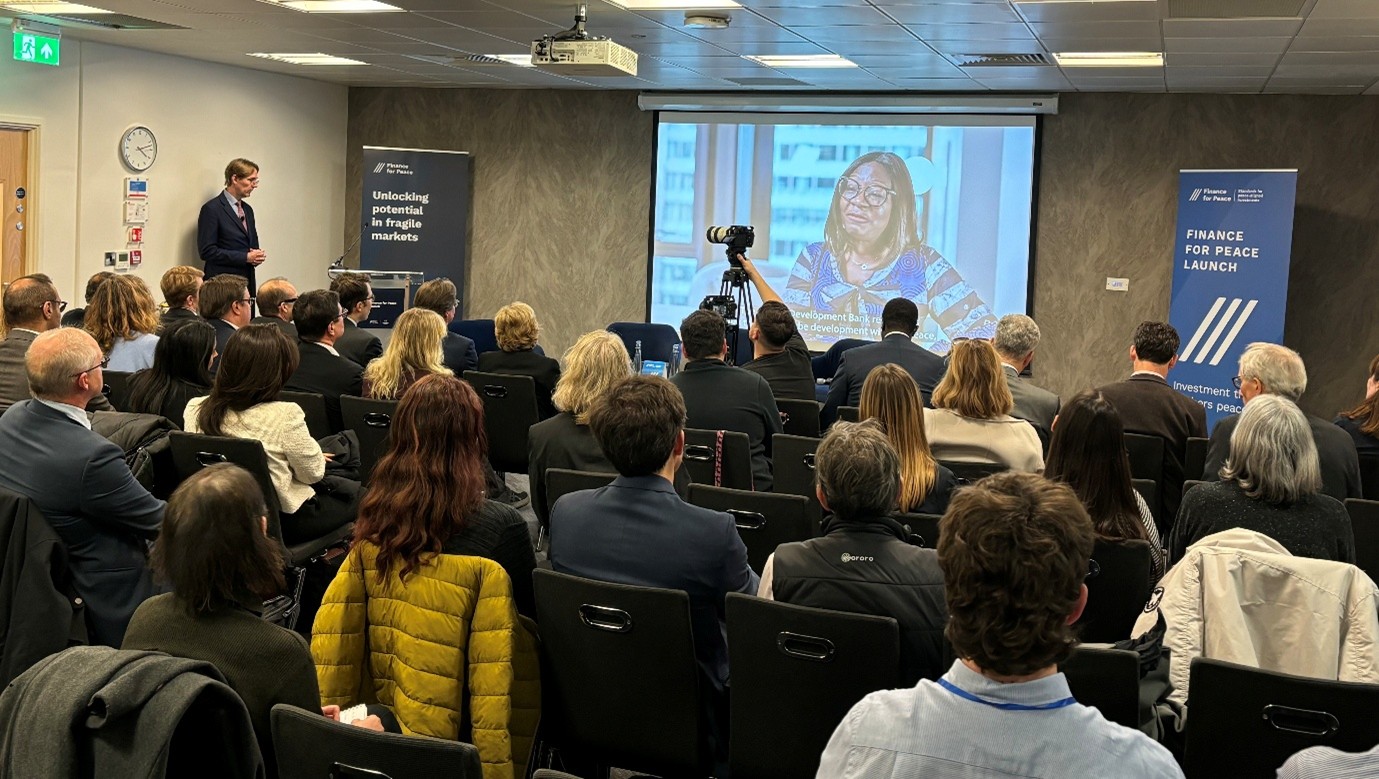
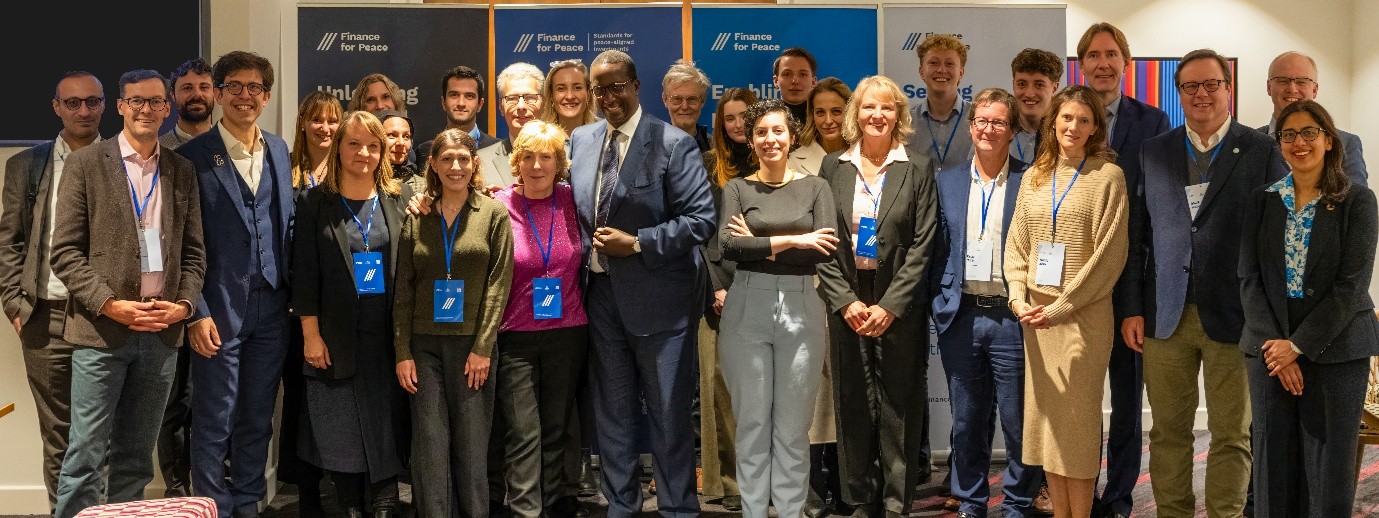
Finance for Peace was launched on 27 November as an independent, standard-setting organisation to be based in London, the United Kingdom. The launch event in the City of London, the UK’s financial centre, saw a full house of impact investing and finance experts, together with peacebuilding and development counterparts, come together to witness the start of this new chapter for peace finance. With its independent set up and new brand identity, Finance for Peace will now take root as a pioneering institution in London, at the heart of one of the world’s financial capitals.
This new organisation represents a bridge: a bridge that connects the principles of peacebuilding with the rigour and reach of modern finance.
Participants discussed the challenges and opportunities of integrating peace standards into finance, emphasising the importance of capacity-building, education and clear frameworks. They noted that intermediaries often fail to understand peace standards, leading to ineffective implementation. There was a consensus on the need for robust mechanisms to measure peace impact, transparent reporting and certifications in order to monitor ongoing alignment.
Itonde Kakoma, President of Interpeace
“Through years of dialogue and research, we identified a critical gap: the lack of a systemic approach to align private sector and investment with peacebuilding.” Kakoma emphasised that peace encompasses “trust, social cohesion and shared opportunity,” and that “Finance for Peace takes that ethos into a new domain, because trust is the currency of effective investment.” He concluded that “Finance for Peace bridges these worlds, demonstrating how investment can be a driver of trust, resilience and peace.”
Fiona Reynolds, Chair, Finance for Peace Steering Committee
“Peace Finance is investment that intentionally improves conditions for peace and realises peace impact while driving inclusive development.” Reynolds stated: “We are not short of money but it is not flowing where it is needed most. This deepens inequality and conflict.” She added: “There is no denying that without the private sector, governments will not resolve current challenges by themselves.”
Dr Felix Karstens, First Secretary, German Embassy London
“Finance for Peace has been one of the flagship projects of the German Federal Foreign Office.” Karstens noted the importance of “the implementation phase, ensuring that peace-positive investments are widely adopted.” He expressed hope that “today’s event marks not just the launch of an independent standard-setting organisation but also a significant step forward in advancing peace.”
“There is a tremendous potential in Peace Finance”
Justin Sykes, Founder and Managing Director of Innovest Advisory, shared insights on linking initiatives as an example of how such approaches can foster stability: intentionally linking the demobilisation of militias with cooperatives and investments, like in the PeaceGold initiative, shows the power of connecting peacebuilding and economic opportunity.
Fiona Reynolds stressed the importance of breaking down silos within the investment community, arguing that addressing issues like climate change requires simultaneous consideration of developing and conflict-affected areas.
Arne Hassel, Chair of the Peace Finance Standards Committee, highlighted the importance of learning from established principles while ensuring that peacebuilding Standards address specific challenges in this area: there’s a lot to learn from principles people have been working on, but Standards specifically address peacebuilding, aligning good business with good impact.
Diana Smallridge, CEO of Momentus Global, highlighted the importance of national development banks in the peace finance equation: “In these fragile areas, national development banks bring the traditional ways of finance. They are the unsung heroes of development who have been below the radar of the green finance space. These banks are close to the risks, much closer than any other financial institutions.”
Having just returned from COP29, Sagarika Chatterjee, Director, Climate Finance, Climate Champions, focused on climate finance’s links to peace finance: “Climate and sustainable development go hand in hand. Peacebuilding will unlock climate financing and vice versa. Developing countries lack finance, not capacity.”
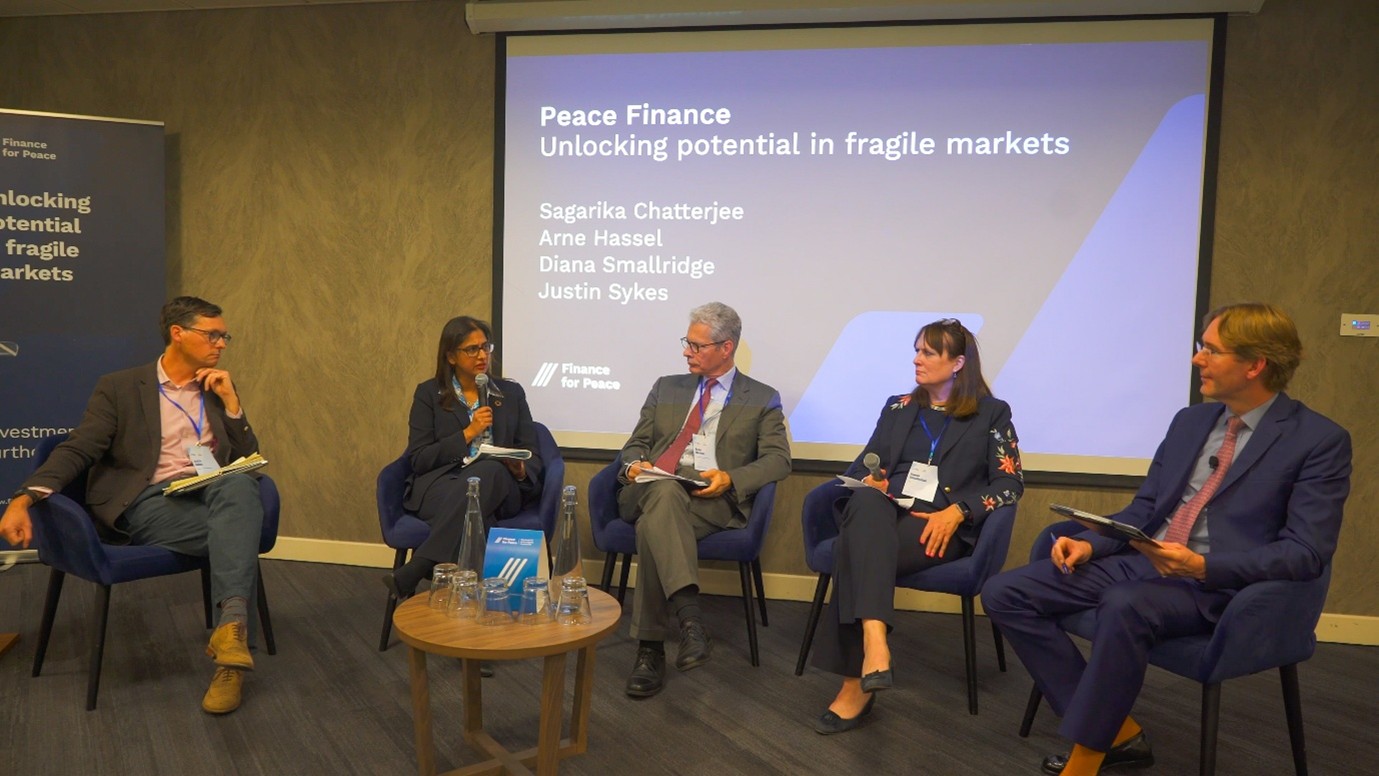
Fiona Reynolds: “Why don’t we invest in emerging markets? Because of risks. But investing in a way that leads to more peaceful outcomes changes the equation.”
Justin Sykes: “The key to success is bringing theory to practice and to facilitate supply and demand of capital.”
Arne Hassel: “Finance is a tool — we can use it for good and bad purposes. Anything that is powerful needs Standards and rules.”
What next for Finance for Peace?
Fiona Reynolds: “The Finance for Peace entity here in London will principally serve as a standard-setting body. It will bring together investors, governments, development institutions, peacebuilders and civil society.” She explained the organisation will “support them to implement peace-aligned investments. By establishing robust frameworks, such as the Peace Finance Impact Framework and the Peace Finance Standards for Peace Bonds and Peace Equity, we provide tools that de-risk align capital and align it with peace outcomes.”
Reynolds concluded: “This initiative builds on a strong legacy of feasibility research and real-world application, making peace-positive investment not only aspirational but achievable.”